
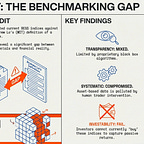

What does good look like for BESS revenues? Given growing BESS-pipelines, the question is increasingly important.
A lot of people have written a lot of stuff about this, but I think there’s more to say, or as an AI-generated podcast host might say: “there’s more to unpack.”
The story, as we know, starts with long-term revenue forecasts: what can a BESS earn over its lifetime? You can buy revenue curves, or you can try to make your own.

Let’s twist and adapt some finance language: buy-side, sell-side. Let’s say that asset owners who are looking to place their asset in the market are on the sell-side, and let’s say that traders/optimisers, originators looking to acquire flexibility for an energy portfolio, are on the buy-side.
Sell-side companies will tend to buy BESS revenue forecast curves, while buy-side participants will have their own forecasts informed by in-house portfolio and trading strategies. (Some companies straddle both sides.)
As more and more BESS develop the following questions will become increasingly important and urgent especially for those on the sell-side who have outsourced intelligence about future revenue AND the means of achieving those expectations in the market.
How is the revenue forecast curve developing (short-, medium-, long-term)? Why?
What revenues are actually achievable? How?
How well are we doing compared to the market? What’s going on?
Now if we think about these questions for a moment we see that none are well defined. They only make sense if you specify a reference point, a trading strategy.
To the extent that the reference strategies are not specified, you are trusting a third party to tell you “what good looks like.”
Some obvious points worth repeating
A BESS itself does not define a strategy, a BESS enables and parametrises a trading strategy.
Your favourite index does not define a trading strategy, it simply tries to estimate what an optimal trading strategy might achieve with a BESS asset.


