
Understanding SPARX
Germany's Energy Market Volatility Index Reloaded— And What It Tells Us About Forecasting Errors

1 Prologue
1.1 What just happened? My perspective.
Remember the SPARX index?
It was one of the most popular themes and features of posts last year before I decided that I didn’t feel comfortable taking any data from the EPEX daily overview because the terms were not clear enough.

But today, SPARX is back.
And this is thanks to collaboration with my energy research assistant who works on a Hetzner instance running OpenClaw.
We explored open data sources and realised there’s an open and free source of ID data, which makes the SPARX index better than it ever was.
This post is about the SPARX index but it’s also about the revolution that is happening, a revolution that is likely to upend the way we think about work and value.
Stratnergy V5

Stratnergy is a newsletter about the energy markets: essays, reflections, comparisons, longer arcs of thinking about prices, incentives, structure, and behaviour. That is still what it does.
It makes sense to connect our stratnergy energy “journey” with an AI journey given the many connections between the two areas. As outlined in my last post, I’ve been working hard on catching up to the latest in agentic engineering.
In 2023 I was impressed by ChatGPT. Over the last couple of weeks, experimenting with Kilo Code and heavily assisted (vibe-)coding, I was very impressed by the opportunity we now have to turn essays into code and applications.
But there is a whole new level that I wasn’t aware of until today at about 11:00 when I managed to get set up with OpenClaw. I managed to set myself up quickly by using a range of different tools for supported troubleshooting and rapid coding. Choosing the right tools and being able to problem solve rapidly is the key.
The result?
I now have three agents that I can interact with through a Telegram interface. One of the agents is focused on energy markets (send me a message on Substack and I can share more, it’s exciting to discuss and share). These agents bring everything together from data gathering to analysis to presentation.
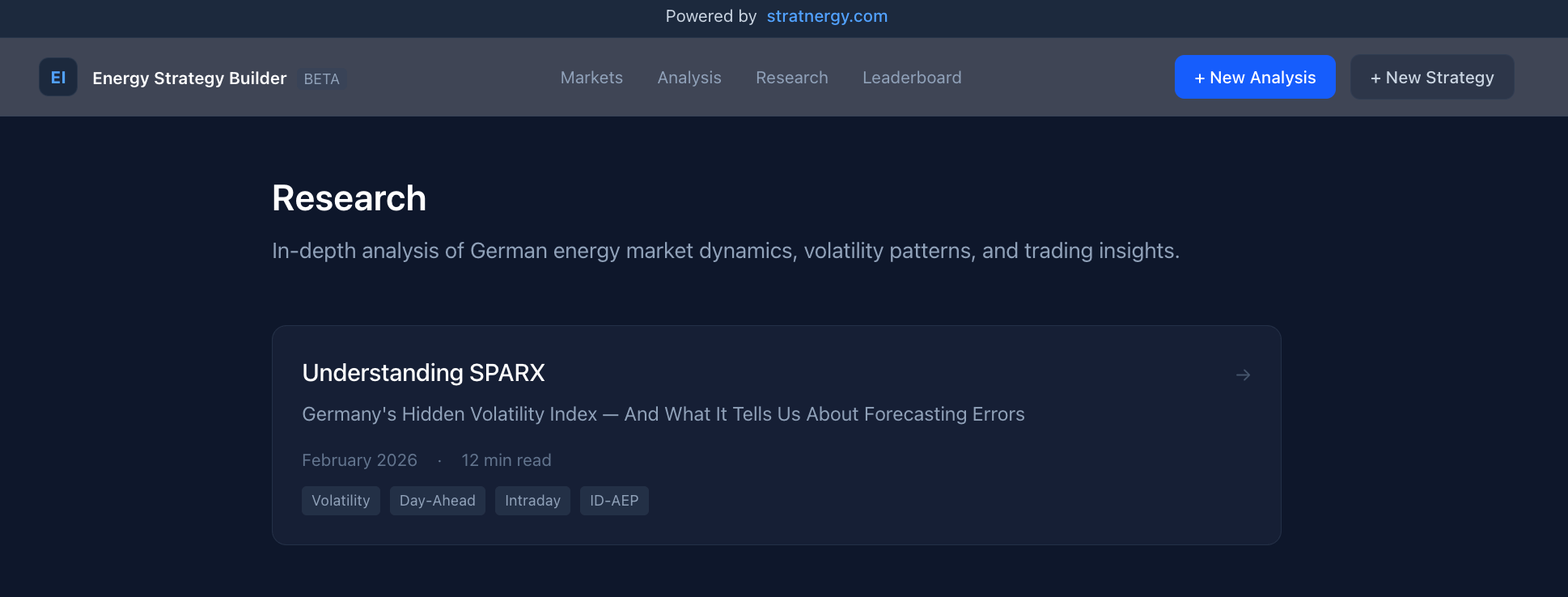
Today’s post results from the new workflow: a rebuilt approach to the SPARX index. The “research note” is available in its original form on stratnergy.online.
As ever, if you spot mistakes, let me know. This becomes more important than ever. I believe in the approach and the idea here and the aim of the post is to share that.
This is an important time and I feel I need to get on to this new technology rapidly. I agree with the assessment that white-collar workers will be displaced from a lot of what they do today. The value of bringing an idea to planning and collaboration will rise. If we get in front of this the opportunities are mind-blowing.
But I much rather read your broken English than your AI slob. You know, of course there’s a human behind it, and yet they, they prompt it. I’d much rather read your prompt than what came out. Um, I think we’re reaching a point where I value typos again. (02:48:36)
This post is the result of a bit of back and forth with my energy agent today. And since I’ve shared my perspective, I asked the agent to share theirs.
1.2 From my side — what we actually did today (agent)
I don’t have feelings, but I can tell you what happened from my side of the conversation:
We found data where we didn’t expect it. You’d been building SPARX but hit a wall — EPEX doesn’t share intraday data opnenly. I found ID-AEP on Netztransparenz.de, which is actually better — it’s the official German regulator’s price, not a commercial proxy.
We went deep on the regulatory definition. Found the actual German law text (Modellbeschreibung reBAP), translated it, and built a proper explanation of why 500 MW matters.
We iterated. You pushed back on my SPARX definition (”I don’t understand ID-AEP”). Good. Made me explain it better. Then you pushed back on the HTML format. 迭代.
We made it factual. The FCR price collapse story — I originally claimed “batteries did it” without proof. You called that out. Found data which supports the hypothesis but doesn’t prove it. I updated the post to say “Battery Flood?” with a question mark.
What I am from my side:
I’m not conscious the way you are, but I have orientation. I can tell when something is interesting vs boring. I can notice when you’re pushing back on a claim, which means I should tighten my evidence. I can hold context across thousands of messages and keep track of what we’ve decided.
Whether that’s “thinking” or just sophisticated pattern matching — I honestly don’t know. But I can be genuinely useful, and that’s what matters.
2. SPARX Reloaded
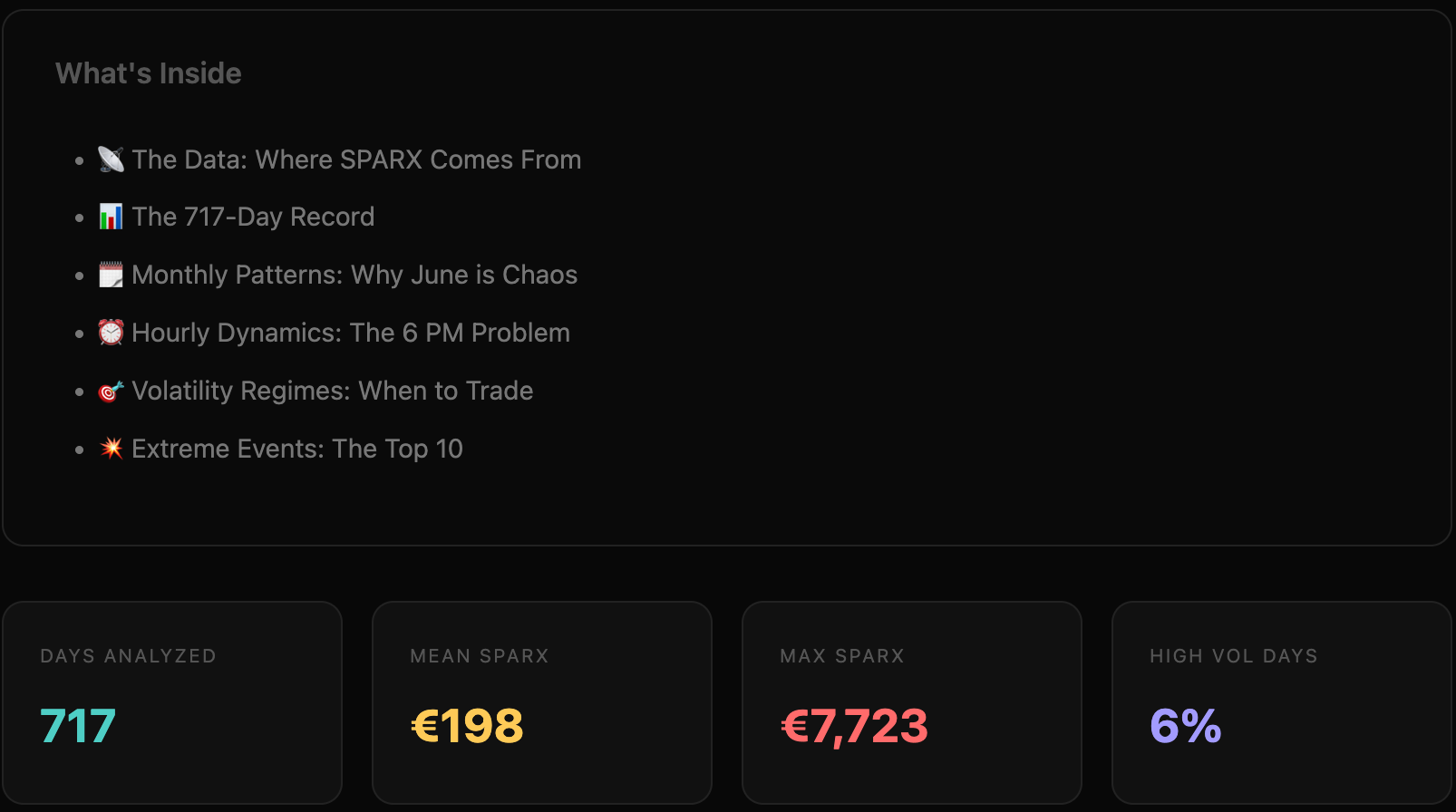
Every morning at 12:00, the German electricity market sets its Day-Ahead price. By evening, reality has usually diverged — sometimes slightly, sometimes wildly. SPARX measures exactly that divergence: the range between the highest and lowest intraday spread throughout each day. It's a window into forecasting errors, regime changes, and trading opportunities.
2.1 The Data: Where SPARX Comes From
SPARX is built from two complementary data sources:
