
To Czechia, I.
Czech day-ahead prices move close to Germany, while the domestic generation mix, load shape and border role tell a different story.

Today we move from Germany to Czechia. The two systems are closely coupled and, as we’ll see below, Czech negative-price hours often arrive with German renewable pressure. The physical system profiles are very different, which makes for good contrast. We’ll stick to the surface today and dig deeper into Czech energy industry background next time. Please let me know any issues or mistakes: this is my first journey into the Czech energy industry.
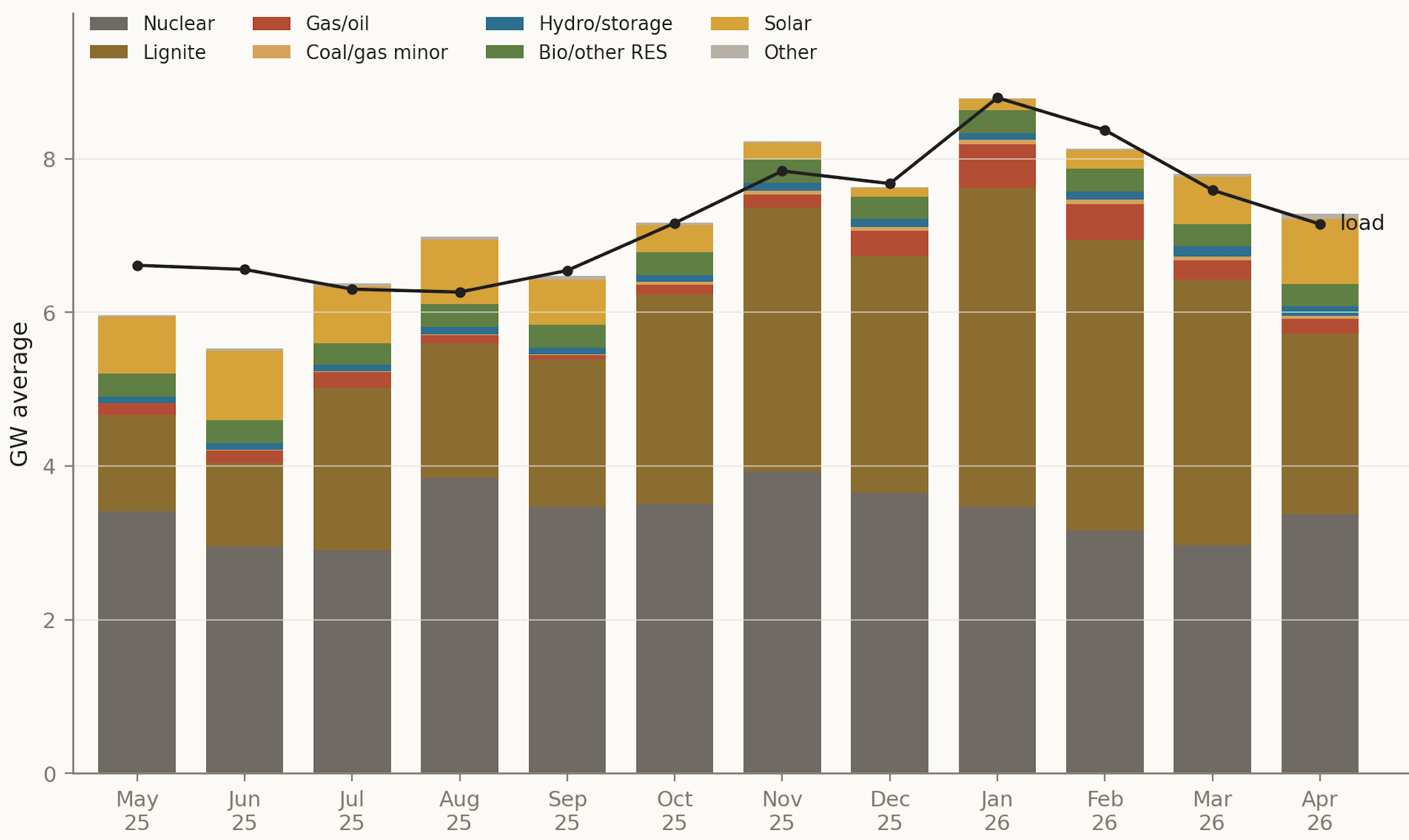
Start with the domestic generation mix over the last year. Czech nuclear averages about 3.4 GW and lignite about 2.6 GW, against average load around 7.2 GW. Solar matters, but the backbone is still nuclear plus lignite.
Czech and German day-ahead prices sit close to each other, as you’d expect. In May to date, the daily DA average is about EUR 98/MWh in Czechia and inGermany.
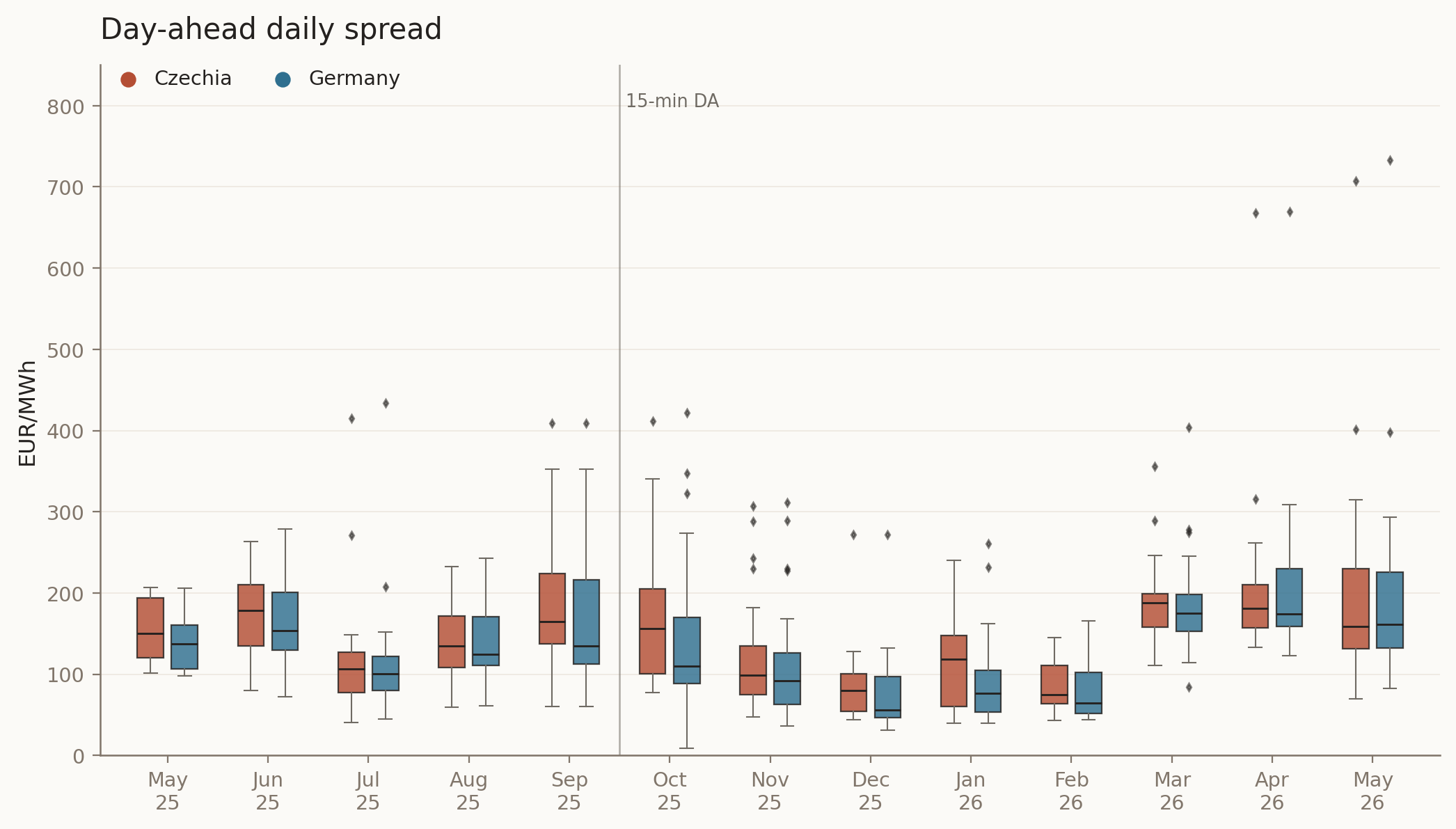
Czechia and Germany are, of course, both cleared inside Single Day-Ahead Coupling. EUPHEMIA takes orders from the power exchanges and network constraints from TSOs, matches supply and demand, allocates cross-zonal capacity implicitly, and returns prices, trades, net positions and scheduled exchanges.
Prices converge when the market can move energy across the relevant borders. They diverge when cross-zonal capacity or flow-based constraints bind, when local bid curves are very different, or in operational fallback and decoupling situations.
