
Surplus and Sovereignty
Energy sovereignty is not freedom from dependence. It is the capacity to respond to dependence.

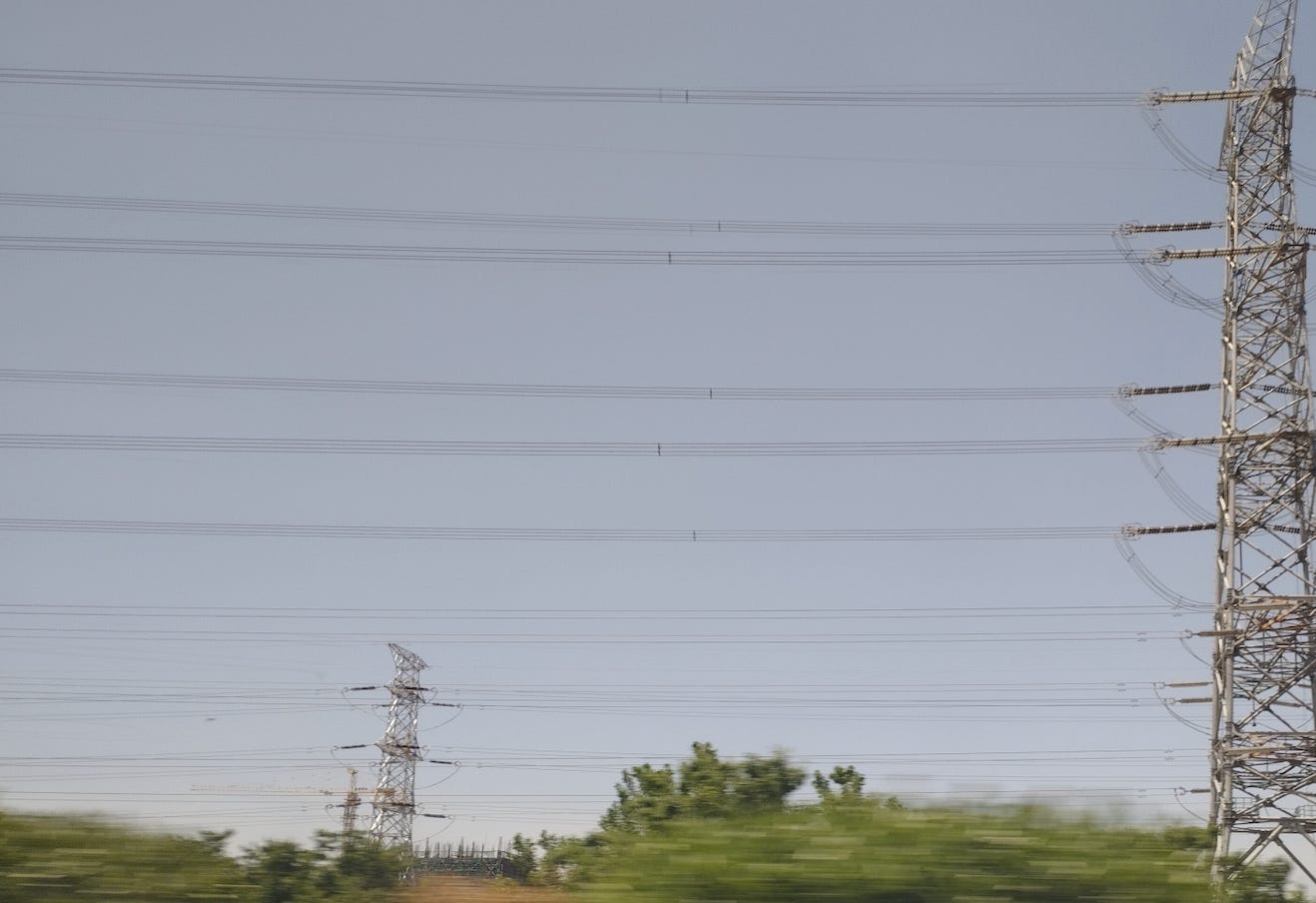
Travelling from Nanjing to Yangzhou in Jiangsu province, I kept noticing pylons: large steel lattice towers, 500 kV-class double-circuit AC lines, part of the high-voltage backbone.
A solar-heavy power system has moments when the marginal unit of electricity is mistimed against demand, extremely cheap, in the wrong place. What are the options?
Use locally.
Store.
Move.
Stop (curtail).
To what extent does a system work across these options ‘intentionally’?
Last time we looked at how Germany moves excess PV-generated electricity to its neighbours and how it relies on France in particular during the evening peak.
Free movement of electricity across Europe is crucial for the German power system.
Has this dynamic developed by choice and intention, or evolved accidentally?
Does it matter?

The opposite of sovereignty is not dependency. It is unchosen dependency.
We might ‘rate’ an energy system on a sovereignty scale based on the extent to which surplus power moves through a system of chosen dependencies.
