
Go with the flow.
Flexibility, low water levels, Euphemia

We have been following cross-border electricity flows in this newsletter recently. Events in Hungary and Romania prompt us to look more closely.
Flexibility is about the ability to shift energy in time and space. Batteries are the purest time-shifters, but geographical connectivity is just as important.
Very low river levels have made nuclear output in the region more fragile. Hungary’s Paks plant and Romania’s Cernavodă plant depend on river water for cooling; Slovenia’s Krško plant is exposed to the same underlying issue through the Sava. Capacity normally treated as firm is increasingly contingent on hydrology.
So how is European flexibility performing?
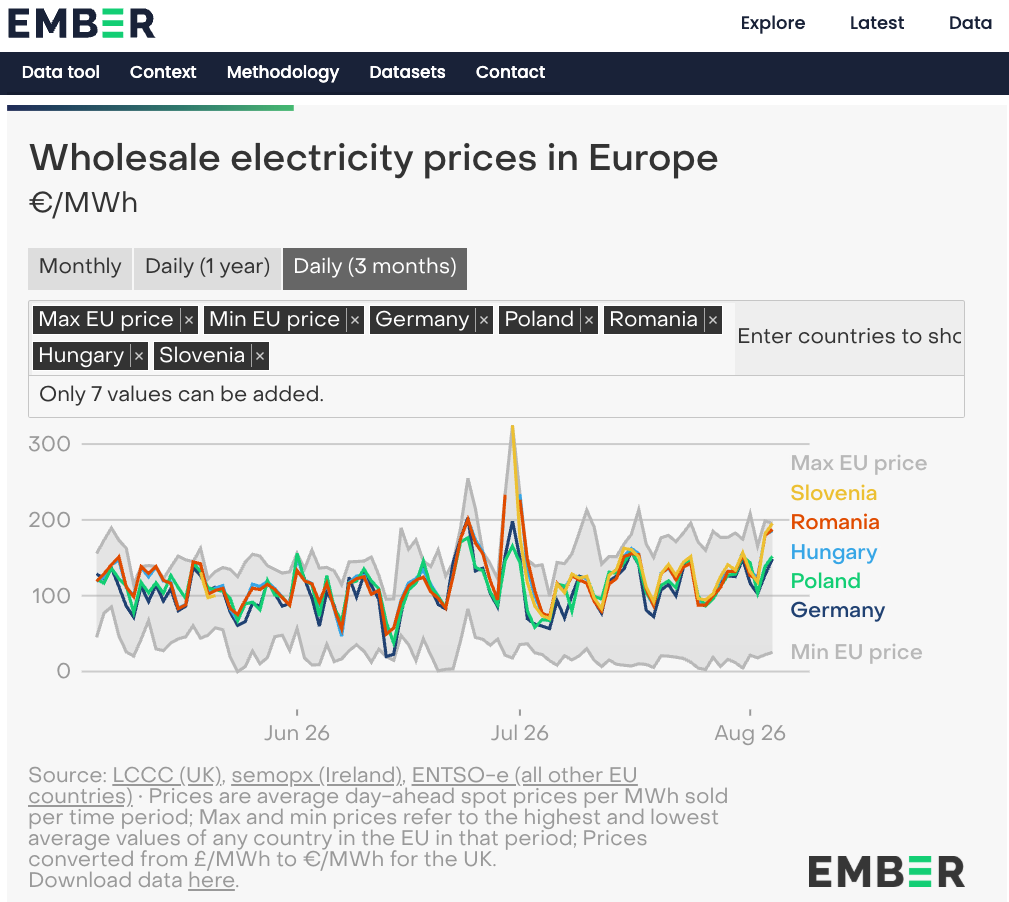
The day-ahead market is revealing energy scarcity in space and time. Hungary, Romania and Slovenia are trading together at elevated prices. What does this indicate about geographical energy flexibility in Europe?
EUPHEMIA (Pan-European Hybrid Electricity Market Integration Algorithm) is the algorithm used to clear Europe’s coupled day-ahead electricity market. It aims to maximise economic welfare by matching supply and demand across bidding zones, subject to the orders submitted to the market and the cross-border capacity made available to it.
Faced with scarcity, the algorithm has been scheduling more energy into Hungary and Romania.
